When the code itself is the asset. If you're building a product to sell, the codebase is what you're creating and you should own it. If your core logic is genuinely unusual — something no platform models — a bespoke build can express it in ways a configured app can't. And if the software must run entirely on your own infrastructure, a bespoke build meets that and we don't. For the everyday operations work — documents, coordination, keeping the numbers straight — a maintained platform is the better trade.
Lotics vs custom-built software
Software built for your exact process — that promise sounds the same whether it comes from a dev shop, a freelancer, an in-house developer, an AI coding tool, or from us. The honest difference is what you're left holding afterward. A bespoke build hands you a codebase you own: every change after handover is a new quote and a wait, the team that built it moves on, and the hard parts nobody scopes up front — permissions and roles, document generation from your templates, reading mixed-language scans — are months of engineering or simply left out. Lotics builds the app for your desk on a platform we keep running, live in days, with changes that ride the subscription instead of a change-order invoice. Here's how the two differ, and when a bespoke build is still the right call.
| Feature | Lotics | Custom-built software |
|---|---|---|
| What you get | Finished AI apps we build and operate on a maintained platform, one per desk | A codebase built to your spec, which you then own and maintain |
| Who keeps it running | We do. Maintenance and updates are part of the subscription | You do, or a paid retainer with whoever built it |
| Time to go live | Days. We build and operate the finished app, implementation included | Typically months of development before the first version goes live |
| Changes after go-live | Part of the subscription, not a change-order invoice | A new quote and a wait for each change |
| Permissions and roles | Field- and record-level access and audit logs, already built into the platform | Months of careful engineering, or left thin to hit the deadline |
| Document processing | AI reads incoming scans, drafts outgoing PDFs, Word, and Excel from your templates | Deep OOXML and PDF-fill work per document type, often out of scope |
| AI's role | Does the desk's manual work: reads incoming documents, drafts outgoing ones, checks the numbers | A coding tool can scaffold the app; the daily manual work still gets done by hand |
| When the builder moves on | The platform keeps running and we keep operating the app | The system stalls when the one person who understood it leaves |
| Cost shape | From $20/month, setup included, scales by scope | An upfront build quote, then paid change requests and a maintenance retainer |
The promise is the same; what you're left holding isn't
Both sound identical: software shaped to exactly how you work. A dev shop, a freelancer, an in-house developer, or an AI coding tool builds you a codebase, and the structural difference is who owns and operates what comes after. With a bespoke build, the deliverable is a codebase you own. On the day it's handed over it fits your process well. Then the business changes — a new document type, a new approval step, a new rate table — and every change is a new quote and a wait, because the shop has moved on to its next project.
And the parts that decide whether the software is safe to run a real operation on are the parts nobody scopes up front. Permissions and roles — who sees which field, which record, who can approve. Producing a clean PDF, Word, or Excel from your own templates. Reading a scanned, mixed-language document into structured data. Backups, monitoring, the migration every time the schema changes. Each is months of engineering on its own, so on a fixed budget they get thinned or left out, and the gap only shows once you depend on the system. When the one developer who understood it moves on, the code stalls — there's no one left who can safely change it.
What Lotics builds, and keeps running
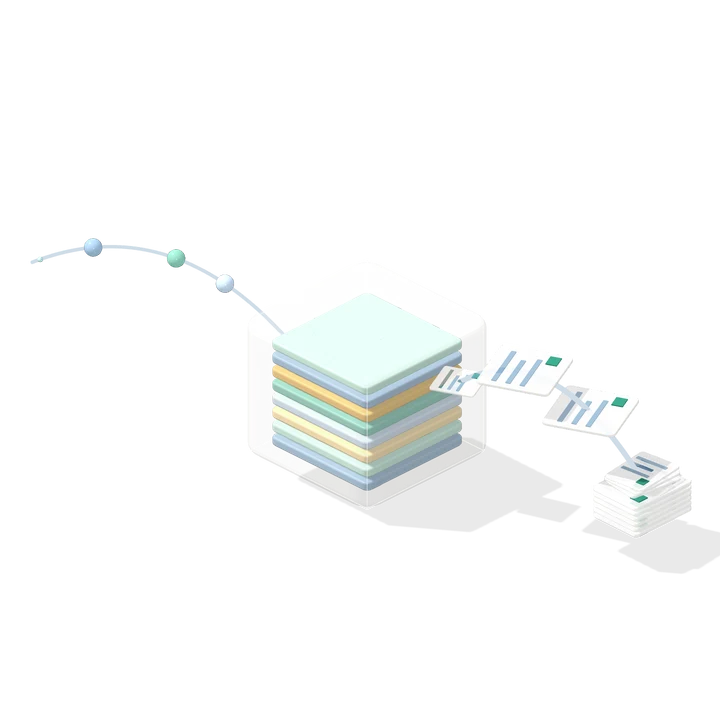
Lotics builds a purpose-built AI app for each desk — the docs cockpit, the sales desk, the quotation app — and AI does that desk's manual work: it reads the documents that arrive (the booking, the invoice, the packing list), drafts the ones that go out (the HBL, the debit note, the report) from your own templates, and checks the numbers match across them. Your team reviews before anything goes out. The difference from a bespoke build is underneath: the permissions, the document engine, the AI, the audit logs, and the backups already exist as the platform. We don't rebuild them per customer; we build the app on top of them.
That's why it's days instead of months, and why changes don't cost a change order. We build the app around your documents, fields, and rules and operate it for you, from $20/month for one process, implementation included. When the business changes, the change rides the subscription. When the platform improves, every app improves with it. There's no codebase for you to own, staff, or keep patched, and your data exports in standard formats — CSV, JSON, Excel, the original PDFs — at any time.
When a bespoke build is the right call
Sometimes owning the code is exactly what you should do, and we'll say so. If the software is a product you intend to sell, the codebase is the asset and you want to own it outright. If your core logic is genuinely unusual — an algorithm or a process no platform models — a bespoke build can express it in ways a configured app can't. And if the software must run entirely on your own infrastructure, with no third-party platform in the path, that's a requirement a bespoke build meets and we don't.
What those cases have in common is that the code itself is the thing you're buying. That's different from the ops manager drowning in paperwork, who doesn't want a codebase — they want the documents drafted, the numbers checked, the desk kept in sync, and someone to keep it all running. For that, a maintained platform beats an owned codebase; for the cases above, own the code.
What AI coding tools change, and what they don't
AI app builders like Lovable or Replit have made the basic version of an app a weekend project — the tables, the forms, the create-read-update-delete screens now scaffold in an afternoon. That part is real, and it's genuinely faster than it was. But the CRUD was never the hard part. Permissions and record-level access, production-quality document generation from your templates, reading messy scans, backups, monitoring, the migration every time the schema changes — these are what turn a weekend prototype into software an operation can depend on, and they're exactly what the coding tool doesn't hand you.
So an AI-scaffolded app has the same shape as any other bespoke build: someone still owns it, staffs it, and keeps it running, and every hard part after the demo is still engineering you're paying for. Lotics carries those hard parts as the platform, already built and operated. The coding tool compresses the easy weekend; we remove the months that follow it.
Which should you choose?
Choose a bespoke build when the code itself is the asset — a product you'll sell, core logic no platform can model, or software that must run entirely on your own infrastructure — and you have the budget and people to build it and keep it running for years. Choose Lotics when the pain is the daily operations work: documents typed by hand, numbers that don't match across the paperwork, a desk you need kept in sync. We build a purpose-built AI app for that desk on a platform we keep running, live in days, and AI does the manual work while your team reviews before anything goes out. Changes ride the subscription instead of a change order, the hard parts — permissions, document generation, backups — are already built, and your data exports at any time.