Run your warehouse with AI
Lotics is the system for AI to draft ASNs, check goods on receipt and build each client's monthly charges.

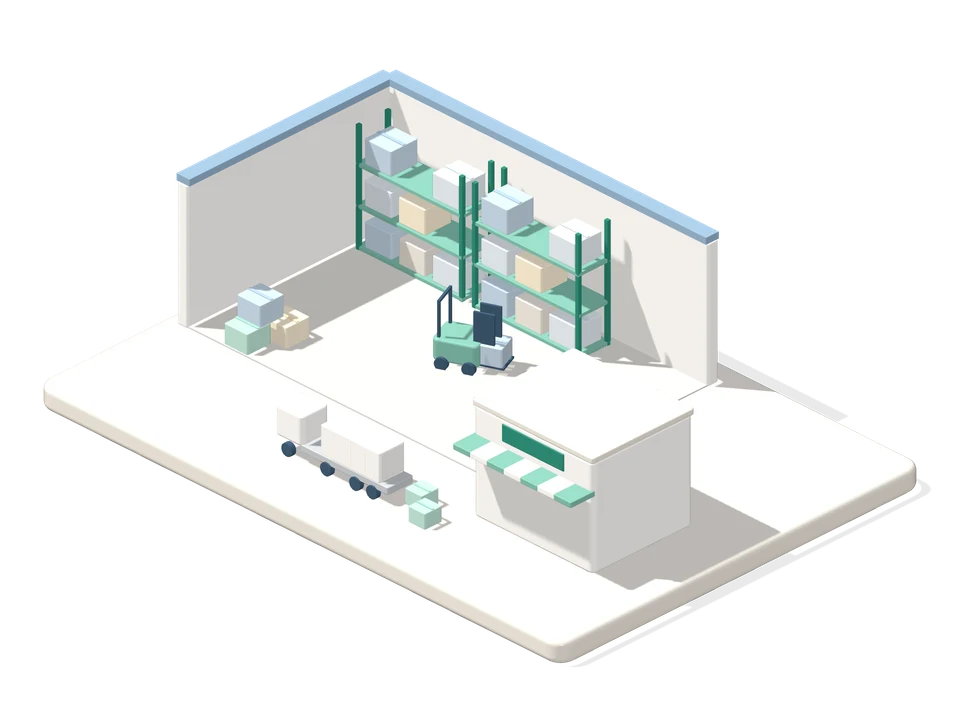
AI on every step of the warehouse
From the inbound notice to the month's charges, AI does the work first and your team signs off.
Know what is arriving
Whether clients send inbound notices by email, Zalo or Excel, AI turns each into an ASN with SKUs, lots, expiry dates and the delivery date.
Receive against the ASN
As the truck is unloaded, staff photograph the carton labels, and AI checks quantities, lots and expiry dates against the ASN and holds anything that differs.
Put every pallet in its place
Once goods are received, AI picks empty slots in the client's zone, puts the earliest-expiring lots where they are easiest to pick and drafts the putaway list for the forklift.
Ship every order right
From the client's orders, AI drafts the pick list in shelf order from the earliest-expiring lots, with packing slips and a handover sheet for each carrier.
Warn before stock runs out
Each client's stock is tracked down to the lot and expiry date, and AI flags SKUs running low and lots nearing expiry, with how much to restock.
Bill every client in full
At month end, AI prices each client's storage, receiving and dispatch at their contract rates and drafts the invoice in MISA, BKAV or WinInvoice for accounting to sign.
Better every day
Each person's experience becomes shared knowledge, so AI knows where each client's goods are stored.


What AI hands you
A finished result at every step, ready for your team to approve.
An ASN for every delivery on its way
Inbound notices from each client's email, Zalo and Excel files land in one list, each ASN with SKUs, quantities, lots, expiry dates and the delivery date. SKUs missing from the client's item list are flagged, and your coordinator books the unloading by arrival date.
Every receipt matched to the ASN down to the lot
Staff photograph carton and pallet labels on their phones; AI reads the lot and expiry and checks the counted quantity against the ASN. Short or damaged cartons and lots that differ go on a discrepancy report with the photos, and nothing enters stock until the warehouse supervisor approves.
Every pallet in a known slot
AI picks empty slots in each client's zone, puts the earliest-expiring lots where they are easiest to reach and drafts the putaway list sorted by rack. The forklift driver photographs the slot label after each drop, so stock sits at its real location and the shift lead sees any pallet not yet racked.
Every order picked from the earliest-expiring lot
Orders clients send by email, Zalo or marketplace export are batched into waves, and AI drafts the pick list in shelf order from the earliest-expiring lots, with a packing slip per order. Handover sheets are split by carrier, and the shift lead counts the parcels before signing them out.
Clients hear early what is running low
Each client's stock by SKU, lot, expiry date and location updates with every receipt, dispatch and count. SKUs running low come with a restock quantity from the dispatch pace, lots nearing expiry are flagged, and each client's account manager approves the report before it goes out.
Every client billed in full for storage
At month end, AI prices storage, receiving, dispatch and extras such as relabelling or stretch-wrapping at each client's contract rates. Accounting approves the statement, AI drafts the invoice in MISA, BKAV or WinInvoice, and accounting signs and issues it.
Experience becomes shared knowledge
The team's notes on how each client's goods are stored go into shared knowledge, so AI applies them next time, even after whoever wrote them has left.
Easy to start and easy to change
The system runs the way your company works.
Start in 10 minutes
AI builds the system around your process and the Excel files you already use.
Change anything
When you need a new approval step or a different quote template, you just tell the AI.
Nothing new to learn
Everyone keeps the steps and paperwork they know, so the whole team can use it from day one.
Security and permissions
Your company decides who can see and change each record.
Peace of mind about your data
The infrastructure meets international security standards. Data is encrypted and backed up automatically every day.
Access by department
Everyone sees and edits only what they're given, and every change shows who made it and when.
AI never oversteps
AI works only within the access it's given, like any member of the team.



The age of AI has begun
Companies around the world are putting AI to work.
AI has to know the company
With the company's data, rules and ways of working, AI works like someone on the inside.
The advantage compounds
Every job done becomes experience, so AI does the next one faster and better.
Late starters struggle to catch up
Experience takes time to build and can't be bought or rushed.
Pricing
Start free with unlimited users on every plan.
Free
$0/mo- Unlimited users
- 1,000 records
- 100 AI Credits a month
- 1 GB of storage
Setup and updates
Set it up with your own ChatGPT or Claude
Team
$60/mo- Unlimited users
- 100,000 records
- 1,000 AI Credits a month
- 500 GB of storage
Setup and updates
Business
$140/mo- Unlimited users
- 300,000 records
- 2,500 AI Credits a month
- 2 TB of storage
Setup and updates
Scale
$280/mo- Unlimited users
- Unlimited records
- 6,000 AI Credits a month
- 5 TB of storage
Setup and updates
Enterprise
Custom quote- Unlimited records
- Integration with your internal systems
- Single sign-on (SSO)
- A written service-level agreement
AI Credits
For the work Lotics AI does. Your own ChatGPT or Claude uses none.
$13.40 / 1,000 creditsAbout 100–200 actions · paid once, never expiring
Frequently asked questions
Don't see your question? Message the Lotics team.
Yes. You give the client's staff access, and they see only their own company's stock, orders and charges, never another client's goods.
Yes. Staff photograph the code printed on a carton label or a rack with their phone camera, and AI reads it and opens that SKU or location, or fills it into the slip they are working on.
Yes. AI counts each SKU's days of stock from the dispatch pace and the restock lead time, and flags SKUs running low with a quantity to order. A 3PL sends the restock request to the client; a company running its own warehouse turns it into a purchase order once the buyer approves it.
No. AI reads the files your WMS exports and handles what sits outside it: clients' inbound notices, stock reports to each client and the month's charges. To move over fully, AI imports the item list, locations and stock from those same files.
Data is encrypted in transit and at rest, hosted in Singapore. Each person sees only what they are given access to, and every change records who made it and when.
No. The AI built into Lotics runs through Anthropic under a commercial agreement that does not use your data to train models. If you use your own AI, such as ChatGPT or Claude, that provider's terms apply. AI gets used to your work by reading back the history in your system, not by being trained on it.
Every change is recorded and can be undone. Where the AI is unsure, it flags the item for a person to check instead of guessing.
No. Your team tells the AI what needs doing and reviews the result, on screens built around the way they already work.
In about 10 minutes. AI builds the system around your process and the Excel files you already use.
Tell the AI and the system changes with it, no developer needed.
Yes. The Lotics team builds and keeps the system up to date for you, from $60 a month, with a 3-month minimum.
Export all of your data at any time, to Excel, CSV or the original files. Everything in the system stays yours.