Run quality control with AI
Lotics is the system for AI to judge each lot by AQL, raise NCRs, draft CAPAs and keep records ready for ISO 9001.

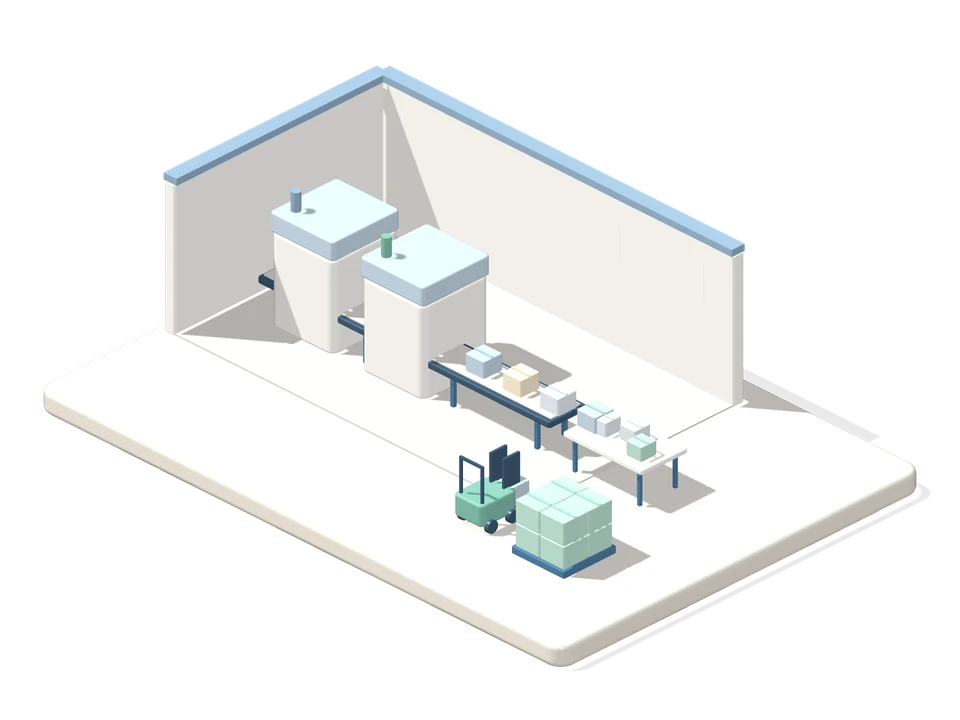
AI on every step of quality control
From the supplier's CoA to the ISO 9001 audit, AI does the work first and your QA team signs off.
Accept only material that meets spec
AI reads the CoAs suppliers send by email, Zalo or Excel, checks each property against your material spec and holds any lot that falls outside it.
Contain defects on the line
Patrol inspectors enter readings on their phone or photograph the check sheet; AI checks them against the tolerance and the visual standard, and when a check fails, the line leader is alerted and everything made since the last check is held.
Judge every finished lot by AQL
QC photographs the final inspection sheet; AI totals the major and minor defects in the sample against the AQL acceptance number, and a lot over the limit is held before it enters stock.
Raise the NCR as soon as a lot fails
From the inspection report and the defect photos, AI raises the NCR with the defect type, quantity, location and a proposed disposition, and the lot stays in the hold area until your QA manager approves.
Fix repeat defects at the root
AI finds past NCRs with the same defect, shows what they have in common and drafts the CAPA with the root cause, owner, due date and re-inspection date.
Every lot's record ready for the ISO 9001 audit
Inspections, NCRs and CAPAs sit on the lot they belong to, with who did what and when, so whatever lot the auditor asks about, AI pulls its full record.
Better every day
Each person's experience becomes shared knowledge, so AI knows which defect gets which NCR level.


What AI hands you
A finished result at every step, ready for your team to approve.
An incoming inspection for every material lot
CoAs suppliers send through Gmail, Zalo or Excel files are read into each lot's inspection record, every property set beside its limit in your material spec. A lot off spec or without its CoA is held, AI drafts the email to the supplier, and your QA manager decides whether to return it or accept it on concession.
Defects contained at the patrol check
Patrol inspectors enter readings and visual defects on their phone, or photograph the paper sheet for AI to read, and each reading is checked against the drawing's tolerance and the product's visual standard. When a check fails, everything made since the last good check is held, and it moves on only after the line leader adjusts the machine and QC checks again.
A verdict on every finished lot by AQL
From the final inspection sheet, AI looks up the sample size for the lot size, totals major and minor defects, and sets them against the AQL you apply to each product. A lot that passes enters stock once your QA manager signs the report; one over the limit is held and goes to an NCR.
A complete NCR the moment a lot fails
AI takes the defect type, severity, quantity and location from the inspection report and QC's photos and fills the NCR on your template with the lot, the customer and an owner. It comes with a proposed disposition such as sort, rework or scrap; your QA manager picks one, and the lot leaves the hold area once the NCR is closed.
Repeat defects fixed at the root
AI searches the history for NCRs with the same defect, product or machine and sets their shift, material lot and settings side by side to show what they share. The CAPA comes with the root cause, corrective and preventive actions, owner and due date; your QA manager approves it, and AI reminds the team when the re-inspection falls due.
Any lot's record on hand at once
Incoming, patrol and final inspections, NCRs and CAPAs sit on the lot they belong to, and every edit records who changed what and when. Whatever lot an ISO 9001 auditor or a customer asks about, AI compiles its traceability file on your template for your QA manager to review before handing it over.
Experience becomes shared knowledge
The team's notes on each defect's NCR level go into shared knowledge, so AI applies them next time, even after whoever wrote them has left.
Easy to start and easy to change
The system runs the way your company works.
Start in 10 minutes
AI builds the system around your process and the Excel files you already use.
Change anything
When you need a new approval step or a different quote template, you just tell the AI.
Nothing new to learn
Everyone keeps the steps and paperwork they know, so the whole team can use it from day one.
Security and permissions
Your company decides who can see and change each record.
Peace of mind about your data
The infrastructure meets international security standards. Data is encrypted and backed up automatically every day.
Access by department
Everyone sees and edits only what they're given, and every change shows who made it and when.
AI never oversteps
AI works only within the access it's given, like any member of the team.
The age of AI has begun
Companies around the world are putting AI to work.
AI has to know the company
With the company's data, rules and ways of working, AI works like someone on the inside.
The advantage compounds
Every job done becomes experience, so AI does the next one faster and better.
Late starters struggle to catch up
Experience takes time to build and can't be bought or rushed.
Pricing
Start free with unlimited users on every plan.
Free
$0/mo- Unlimited users
- 1,000 records
- 100 AI Credits a month
- 1 GB of storage
Setup and updates
Set it up with your own ChatGPT or Claude
Team
$60/mo- Unlimited users
- 100,000 records
- 1,000 AI Credits a month
- 500 GB of storage
Setup and updates
Business
$140/mo- Unlimited users
- 300,000 records
- 2,500 AI Credits a month
- 2 TB of storage
Setup and updates
Scale
$280/mo- Unlimited users
- Unlimited records
- 6,000 AI Credits a month
- 5 TB of storage
Setup and updates
Enterprise
Custom quote- Unlimited records
- Integration with your internal systems
- Single sign-on (SSO)
- A written service-level agreement
AI Credits
For the work Lotics AI does. Your own ChatGPT or Claude uses none.
$13.40 / 1,000 creditsAbout 100–200 actions · paid once, never expiring
Frequently asked questions
Don't see your question? Message the Lotics team.
QC enters them on a phone, photographs the gauge's screen or uploads the Excel file the instrument exports, and AI reads them into the right inspection. Lotics does not pull from instruments itself; if your measuring software can send data to a webhook, a Lotics automation receives it and records it on the inspection.
Yes. Each instrument carries its calibration due date, AI reminds the person in charge before it lapses, and your QA manager is alerted to any inspection recorded with an overdue instrument.
Yes. From the final inspection results, AI drafts the lot's CoC on your template or the one the customer requires. A lot with an open NCR gets none, and your QA manager signs before it goes out.
Yes. You give the customer's staff access, and they see only the inspection reports and certificates for their own lots, never another customer's.
Data is encrypted in transit and at rest, hosted in Singapore. Each person sees only what they are given access to, and every change records who made it and when.
No. The AI built into Lotics runs through Anthropic under a commercial agreement that does not use your data to train models. If you use your own AI, such as ChatGPT or Claude, that provider's terms apply. AI gets used to your work by reading back the history in your system, not by being trained on it.
Every change is recorded and can be undone. Where the AI is unsure, it flags the item for a person to check instead of guessing.
No. MISA, Fast, KiotViet and your own operations software stay as they are. Lotics connects to them, and AI does the data entry and cross-checking in between.
No. Your team tells the AI what needs doing and reviews the result, on screens built around the way they already work.
In about 10 minutes. AI builds the system around your process and the Excel files you already use.
Tell the AI and the system changes with it, no developer needed.
Yes. The Lotics team builds and keeps the system up to date for you, from $60 a month, with a 3-month minimum.
Export all of your data at any time, to Excel, CSV or the original files. Everything in the system stays yours.